
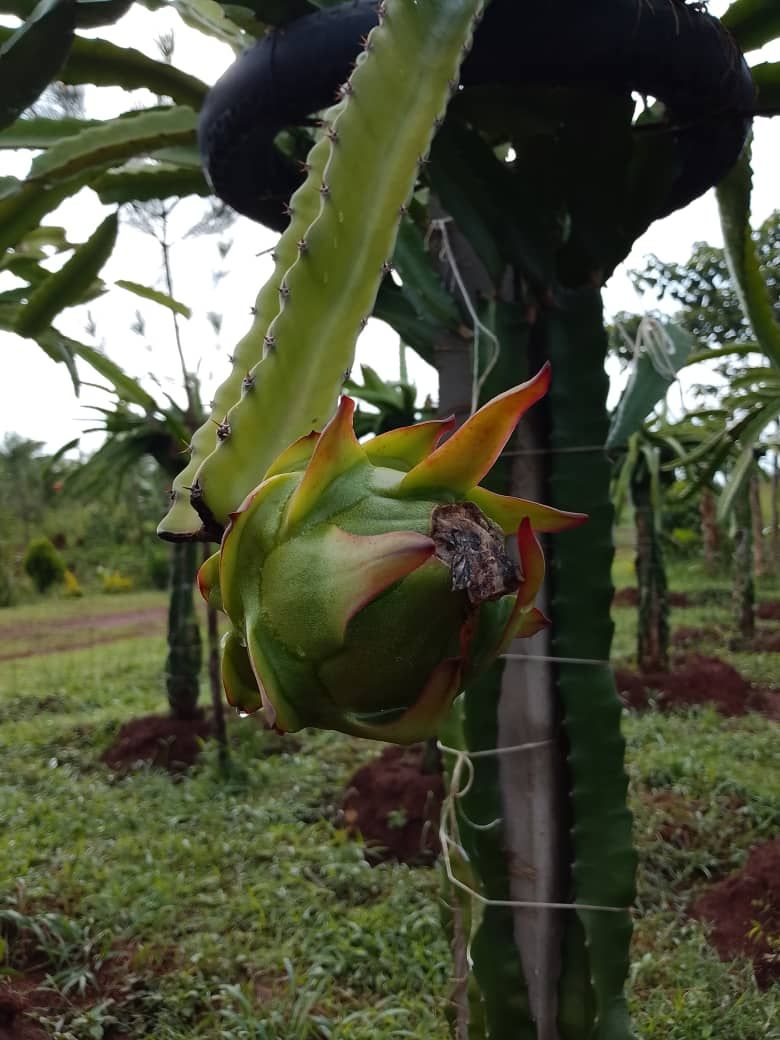
From Climate Challenges to New Possibilities: How Dragon Fruit Is Empowering Women in Northern Uganda
Northlight Green Services featured in a story exploring women, climate resilience, livelihoods and dragon-fruit farming in Northern Uganda
We are pleased to share that the work of Northlight Green Services and our efforts to support women and communities in Northern Uganda have been featured in a recent article published in Chinese.
The article, titled “Why did she teach women to grow dragon fruit in Uganda?”, was written by Uranus HAO following an encounter with Jennifer Okusia, founder of Northlight Green Services, at an international conference on climate change mitigation and adaptation in Tunisia.
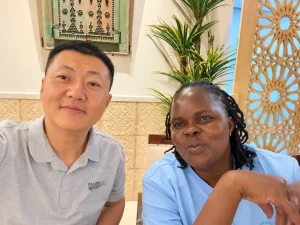
Originally published in Chinese, the story offers an outside perspective on Jennifer’s work and the connection between environmental protection, women’s empowerment, land rights and sustainable livelihoods.
Read the original Chinese article →
Looking Beyond Environmental Problems
Northern Uganda has experienced significant social, economic and environmental challenges. For many communities, livelihoods remain closely connected to natural resources.
The article highlights an important reality behind environmental degradation: people cannot simply be asked to stop activities that damage the environment without addressing the economic needs that drive those activities in the first place.
When families depend on activities such as charcoal production, brick making and other uses of natural resources for income, environmental conservation must also be connected to sustainable alternatives that can support household livelihoods.
This is one of the issues that has shaped Jennifer Okusia’s work through Northlight Green Services, particularly its focus on women, youth, land rights, community livelihoods and environmental sustainability.
Why Dragon Fruit?
The story explains how dragon fruit became part of this approach.
After encountering dragon-fruit farming during an exchange event in Nairobi, Jennifer began exploring whether the crop could work in Northern Uganda.
Dragon fruit is a drought-tolerant crop that can withstand hot conditions and requires relatively little water compared with many other crops. With Northern Uganda experiencing changing rainfall patterns and temperatures that can become very high, Jennifer saw an opportunity to explore whether the crop could provide an additional livelihood option for local communities.
Rather than immediately encouraging farmers to grow it, Northlight Green Services first established a learning centre and demonstration farm.
In May 2024, seedlings were introduced from Kenya, while experienced farmers were brought in to share practical knowledge on establishing trellises, pruning and managing the crop.
Learning by Doing
One of the most powerful aspects of the story is the emphasis on practical learning.
Dragon-fruit farming may appear straightforward, but producing consistently requires knowledge and dedication. The article describes how Jennifer and her team learned through experience, including the need for manual pollination because the flowers primarily open at night.
At times, the work required the team to remain in the field late into the night, with some pollination work continuing until around 3:00 a.m.
The demonstration farm eventually began flowering after approximately eleven months and produced its first fruit about a year after establishment.
The experience also became a platform for sharing knowledge with others.
According to the article, Jennifer has trained more than 300 people, distributed thousands of seedlings, and supported the development of more than 20 new planting sites in Northern Uganda and other areas.
But the objective is not simply to distribute seedlings.
“If you only provide seedlings without knowledge, it is irresponsible.”
The emphasis is on equipping farmers with the knowledge needed to establish, maintain and sustainably benefit from the crop.
Putting Women and Youth at the Centre
The story also explores why women and young people are an important focus of the initiative.
In many households, women carry significant responsibilities for food, children and family wellbeing. When agriculture is affected by climate change, changing rainfall patterns and declining productivity can therefore have a direct effect on household income and food security.
For women with access to even a small piece of land, a higher-value, perennial and relatively drought-tolerant crop can create an additional opportunity for income generation.
But the impact goes beyond income.
Income creates choices.
It can reduce dependence on environmentally destructive activities, strengthen women’s ability to participate in household and land-related decisions, and create opportunities for young people to build livelihoods within their own communities.
This is why the work connects livelihood development with women’s empowerment and land rights, rather than treating each issue separately.
More Than a Crop
Perhaps the most meaningful message from the article is that the dragon fruit itself is only one part of a much bigger story.
Behind the crop are questions of:
- Women’s economic empowerment
- Land rights
- Youth opportunities
- Climate resilience
- Food and household security
- Sustainable livelihoods
- Environmental conservation
- Knowledge sharing and community capacity building
The article describes Jennifer’s approach as one that looks beyond the immediate environmental problem to understand why communities depend on activities that can harm their environment — and what alternatives can make sustainable choices possible.
The article ends with a powerful reflection on the women growing dragon fruit in Northern Uganda.
Dragon fruit can survive in hot and relatively dry conditions, retaining water and eventually producing vibrant and sweet fruit.
The author draws a parallel between the plant and the women involved in the initiative — women who may have limited resources and face challenges related to land, poverty and family responsibilities, yet continue to find ways to build stronger livelihoods and create new possibilities for themselves and their communities.
For us at Northlight Green Services, this is a meaningful reflection of what community-driven development can look like: working with communities to turn challenges into opportunities, while ensuring that environmental sustainability and people’s livelihoods move forward together.
A Story That Deserves to Be Shared
We are grateful to Uranus HAO for taking the time to listen to Jennifer’s story and share it with an international audience.
The article provides a unique perspective on the work being done in Northern Uganda and highlights how locally driven solutions can contribute to broader conversations around climate change, women’s empowerment and sustainable development.
Most importantly, it reminds us that meaningful change does not always begin with complicated solutions.
Sometimes, it begins with a small piece of land, a new idea, a group of women willing to learn, and the determination to grow something different.
From one seedling to many possibilities.
About the original article
Original title: Why did she teach women to grow dragon fruit in Uganda?
Author: Uranus HAO
Original language: Chinese
Published: September 23, 2026
Original publication: WeChat
This page is an English-language adaptation and summary of the original story. The original article remains the work of its author and publisher.


Leave a Reply